Hydraxio’s Stainless Steel Hose Barb & Push On Hose Fittings –Your Trusted Manufacturing Partner

Hydraxio, a leading manufacturer and supplier of stainless steel push on hose fittings and hose barb in China, serves major hydraulic hose and fittings wholesalers distributors and brand manufacturers(OEM Service) worldwide. We’re committed to reliable quality, timely delivery, and professional service.
Our hose barb & push on hose fittings are interchangeable with all majoy brands. Such as Parker and Eaton.
Buy top-quality stainless steel hose barb & push on hose fittings, contact our overseas sales team with any inquiries.
Wholesale Stainless Steel Hose Barb & Push On Hose Fittings At Hydraxio: Quality, Stability, and Performance You Can Depend On
At Hydraxio, our stainless steel hose barb & push on hose fittings not only meet but also exceed SAE, DIN & ISO standards. Specializing exclusively in stainless steel, including AISI 304 (1.4401), AISI 316L (1.4404), and AISI 316Ti (1.4571). Trust in our dedication to excellence, as we provide hydraulic hose barb & push on hose fittings that set the industry standard.
- Wholesale Price
- Stable Performance
- Quality Raw Materials
- Focused On Stainless Steel Only
- CAD Drawings & Technical Support
- Compliance with International Standards

Male NPT Hose Barb

Female Swivel JIC Push On

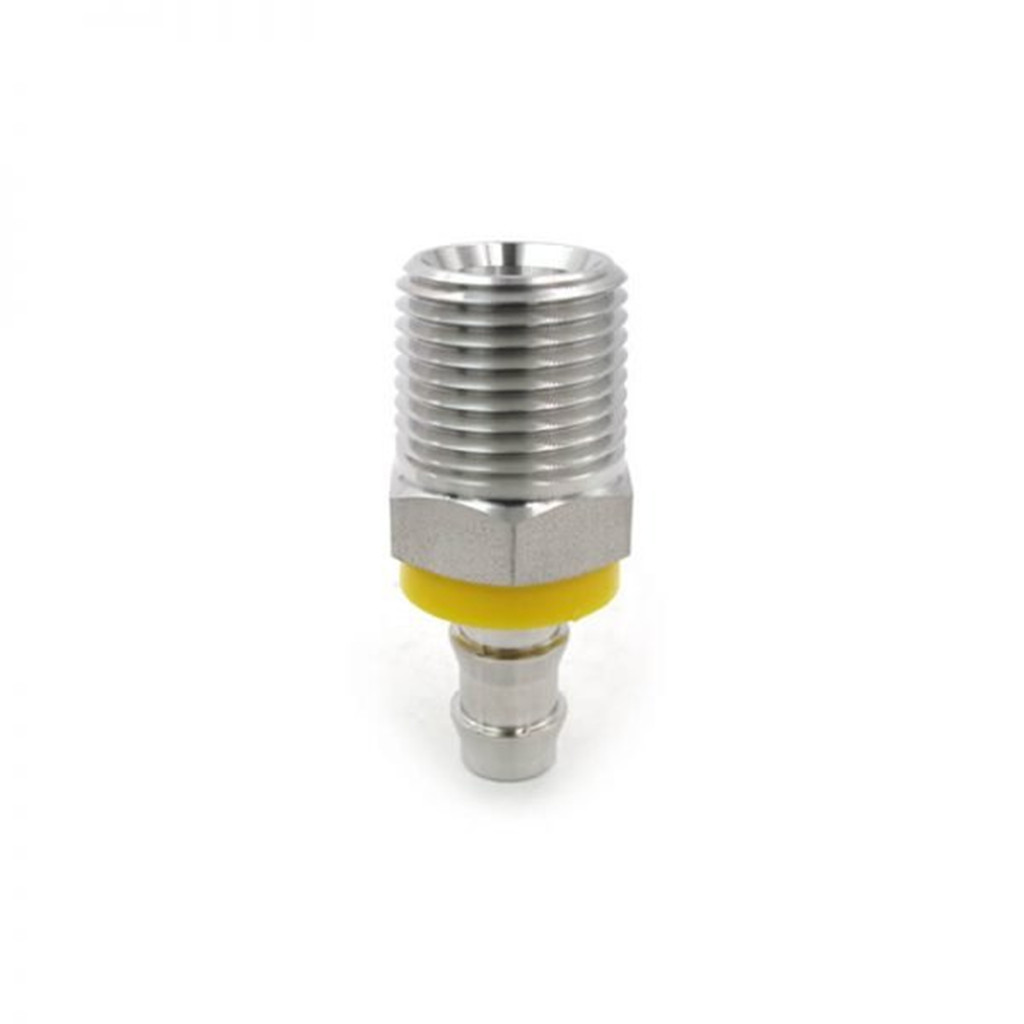
Male NPT Push On

Female Swivel JIC Hose Barb

Male NPT Hose Barb Elbow

Male NPT Tee Hose Barb
What's Hose Barb & Push On Fittings
Hydraxio’s Hose barb fittings and push-on hose fittings are specialized tubing connectors designed for low-pressure hoses. Commonly crafted from brass or stainless steel, they come with an internal barb system that securely attaches the tubing to the fitting.
Key Features
- Materials: Typically made of brass or stainless steel, these fittings are durable and resistant to corrosion.
- Internal Barb System: The barb system ensures a secure connection without the need for crimping.
- Variety of Shapes and Sizes: Available in different shapes and sizes, they cater to various specific needs and applications.
Applications
These fittings find usage in diverse areas such as:
- Home Plumbing Systems: For connections in water supply and drainage systems.
- Industrial Machinery: As part of hydraulic and pneumatic systems in various machines.
- Automotive Systems: Used in fuel lines and other fluid conveyance systems within vehicles.
Low-Pressure Applications
Hose barb fittings and push-on hose ends are particularly suitable for scenarios where crimping is not an option or desired. They offer an easy-to-use and reliable option for low-pressure applications.
Conclusion
Hose barb fittings and push-on fittings are versatile and convenient connectors for low-pressure hoses. Their design allows for easy attachment without the need for specialized tools or crimping, making them a popular choice in various industrial, automotive, and domestic applications.
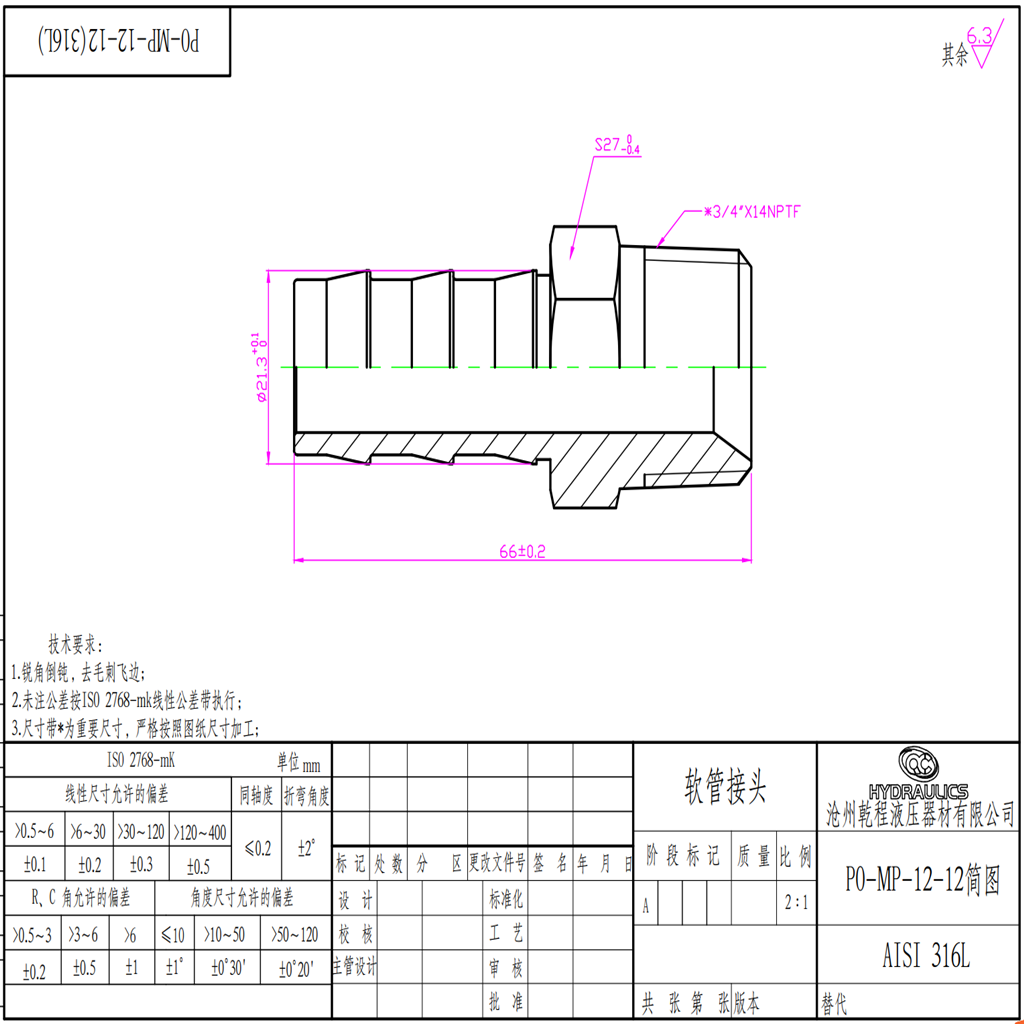
Technical Support & Solutions
At Hydraxio, we pride ourselves on our comprehensive expertise in engineering and design. From the initial concept to the final product, our team is equipped to transform your ideas into tangible, high-quality hydraulic solutions. Our commitment to innovation ensures that we deliver not just products, but value-driven solutions tailored to your needs.
Free Drawings
Taiored Solutions
Technical Support
Push On Hose Barb Size Chart
Hydraxio: Grow Your Market Share with Our Reliable SS Hydraulic Fittings & Solutions
With over 20 years of industry leadership, Hydraxio specializes in the manufacture of stainless steel tube and hose fittings. Our reputation is built on a foundation of exceptional team expertise, cutting-edge technology, rigorous quality control, robust production capacity, and unparalleled professional service.
Widely recognized by global hydraulic & industrial wholesalers, distributors, and OEMs across sectors including hydraulic, pneumatic, oil & gas, chemical, marine, and shipbuilding, our products are synonymous with reliability and quality. We also provide OEM service to major worldwide hydraulic fitting manufacturers, helping them reduce production costs and gain more market share.
Hydraxio continues to thrive in the high-quality overseas market, consistently meeting and often exceeding customer expectations. As a dependable and respected supplier of stainless steel hydraulic fittings, we remain committed to innovation, quality, and customer satisfaction.
Certificates

ISO 9001:2015

ISO 14001:2015
Why Choose us
State of The Art Facilities
Leveraging cutting-edge facilities and equipment, Hydraxio crafts industry-leading stainless steel hydraulic fittings. Our seasoned supervisors, with over 10 years of experience, guide a unified team focused on quality, efficiency, and a shared goal of 100% customer satisfaction. warehouse, shipping, and quality control-have specific objectives that contribute to our overall goal of 100% customer’s satisfaction.
Professional Service
As a professional manufacturer, our engineering department can provide technical service. Like new products designing, CAD drawings and technical advice. Our overseas sales department are 100% well trained with strong industry & product knowledge and service awareness, who can make a quick response within 24 hours to greatly improve the communication efficiency.
Zero Quality Issues
Choose Hydraxio for precision and reliability. In the high-pressure world of hydraulics, our Quality Control Department upholds stringent procedures, ensuring impeccable products. Additionally, a 3.1 material certificate accompanies each shipment, confirming the integrity of our materials.
On-Time Delivery
Trust Hydraxio’s commitment to timeliness. With a 99.99% on-time delivery rate sustained for 3 years, we ensure that consistency is more than a promise—it’s a guarantee. Our ready stock of essential materials enables us to expedite urgent orders without delay.
Testimonials
As a distributor of hydraulic fittings in the USA, I must commend Hydraxio for their exceptional products. The quality and stability of their fittings are remarkable, andtheir prompt feedback and excellent after-sales service made the purchasing experience seamless. Hydraxio has effectively addressed our main concerns, and I strongly recommend them to others in our industry.
Tony, Owner and Purchaser from USA
We are a hydraulic fittings manufacturer in Germany, we highly value Hydraxio for their stable product quality and reasonable pricing. Their fittings have consistently met our standards, enabling us to save costs without compromising quality. We look forward to continued collaboration and recommend Hydraxio to others seeking dependable products at competitive prices.
Robert, head of purchasing from Germany
Frequently Asked Questions
At Hydraxio, we maintain inventory for popular sizes of HY & 43 series hose fittings to cater to immediate demands. Even in cases where specific stock is unavailable, our ready supply of commonly used raw materials ensures that we can expedite production. This enables us to offer exceptionally quick delivery times for urgent orders, affirming our commitment to responsiveness and customer satisfaction.
No, we don't have MOQ requests if the fittings are in stock. For items not in stock, our standard MOQ is 200 pieces per size. For trial orders, we can accommodate lower quantities, such as 100 or 50 pieces, to facilitate the start of our cooperation.
Certainly! We can provide samples for your initial evaluation, and we also have the capability to produce samples based on your specific drawings.
Delivery times vary based on order volume and stock availability. If the fittings are in stock, we can ship within 1 working day post PO receipt. If not in stock, production typically takes 7 to 45 days, depending on the order size.
Our standard terms are 30% down payment in advance, with the balance payable against the copy of the Bill of Lading (BOL). We are open to discussing more flexible payment terms with serious buyers.
Yes, we offer OEM services and have collaborated with several global stainless steel hydraulic fittings manufacturers. By partnering with Hydraxio, you can significantly reduce production costs and enhance your market presence.
CONTACT FORM
Contact Us Today to Elevate Your Business
Don’t miss the opportunity to transform your hydraulic fittings distribution. Reach out to Hydraxio here. Let’s work together to achieve your business goals.